In Sacramento County, California, an arrest warrant is a legal document issued by a judge that authorizes law enforcement to arrest a specific individual. These warrants are only granted when there is probable cause—meaning enough evidence exists to believe a person has committed a crime. Judges review police reports, witness statements, and other factual data before signing off on a warrant. Once approved, the warrant becomes active and allows officers to detain the named person. If the suspect cannot be located immediately, the warrant remains outstanding until the individual is arrested, appears in court, or posts bail. Warrants do not expire and stay in the system until resolved by a judge or law enforcement action.
Residents and legal professionals often need to check for active or outstanding warrants for personal safety, employment background checks, or legal proceedings. Sacramento County provides several official channels to search for warrant information, including online databases, phone inquiries, and in-person visits to government offices. While not all records are publicly available due to privacy and ongoing investigation concerns, key details such as names, charges, bond amounts, and court dates may be accessible through authorized systems. Knowing how to properly search these records ensures individuals can address legal matters promptly and avoid unexpected arrests during routine encounters with law enforcement.
Types of Warrants in Sacramento County
Not all warrants are the same. Sacramento County issues different types based on the nature of the offense, court involvement, and enforcement priority. Knowing the distinction helps determine how to respond and where to search.
Bench Warrants
Bench warrants are issued by a judge when someone fails to appear in court, violates probation, or ignores a court order. These are common for minor offenses like traffic tickets or missed hearings. They do not require new evidence—only proof of non-compliance.
- Issued by: Superior Court judges
- Common Reasons: Missed court date, unpaid fines, probation violation
- Search Method: Use the court index at services.saccourt.ca.gov/indexsearchnew/. Look for “Bench Warrant” in the case notes.
- Resolution: Appear in court or pay fines. Some can be cleared by scheduling a new hearing.
Felony and Misdemeanor Arrest Warrants
These warrants stem from criminal investigations where law enforcement presents evidence to a judge. Felony warrants involve serious crimes like assault, robbery, or drug trafficking. Misdemeanors cover lesser offenses such as petty theft or vandalism.
- Felony warrants are often listed on the Most Wanted page.
- Misdemeanor warrants may only appear in court records after charges are filed.
- Both types allow immediate arrest upon contact with police.
- Bond amounts vary: felonies typically require $10,000–$50,000; misdemeanors range from $500–$5,000.
Active felony warrants remain in statewide databases, making them traceable across California. Misdemeanors may be limited to county systems unless escalated.
Outstanding vs. Active Warrants
The terms are often used interchangeably, but have technical differences. An active warrant has been newly issued and is being pursued by law enforcement. An outstanding warrant means the person has not been located or arrested, and the order remains in force indefinitely.
| Status | Definition | Search Location |
| Active | Recently issued; officers are actively seeking the person | Most Wanted list, Sheriff hotline |
| Outstanding | Not yet executed; remains in system until arrest or court resolution | Court index, inmate search (if arrested later) |
Both statuses carry the same legal weight. If you discover either, consult an attorney before taking action.
Sacramento County Warrant & Court Records Search
Sacramento County provides multiple official government systems for accessing arrest warrants, inmate records, and criminal court case information. These records are managed by the Sacramento County Sheriff’s Office and the Superior Court of California, ensuring accurate, legally verified, and regularly updated public data. Users should always rely on official portals to avoid outdated or incorrect third-party information.
The primary systems used for Sacramento County record searches include the Sheriff’s inmate and wanted databases and the Superior Court case index system. Each tool serves a different purpose depending on whether you are checking custody status, active warrants, or court filings.
Sacramento County Sheriff’s Warrant & Inmate Search
The Sacramento County Sheriff’s Office provides an official https://www.sacsheriff.com/ online system that allows users to search for individuals currently in custody or recently arrested. While it does not display every active warrant, it is the most reliable source for confirming arrests linked to warrants.

How to Perform a Search
To check inmate or custody records:
- Enter the person’s full name or booking number
- Click the Search button
- Review available records
If a booking exists, the system will display detailed custody information, including arrest date, charges, bail amount, and jail facility location. The booking number is the most accurate identifier and should be used whenever available.
Sacramento County Superior Court Case Search
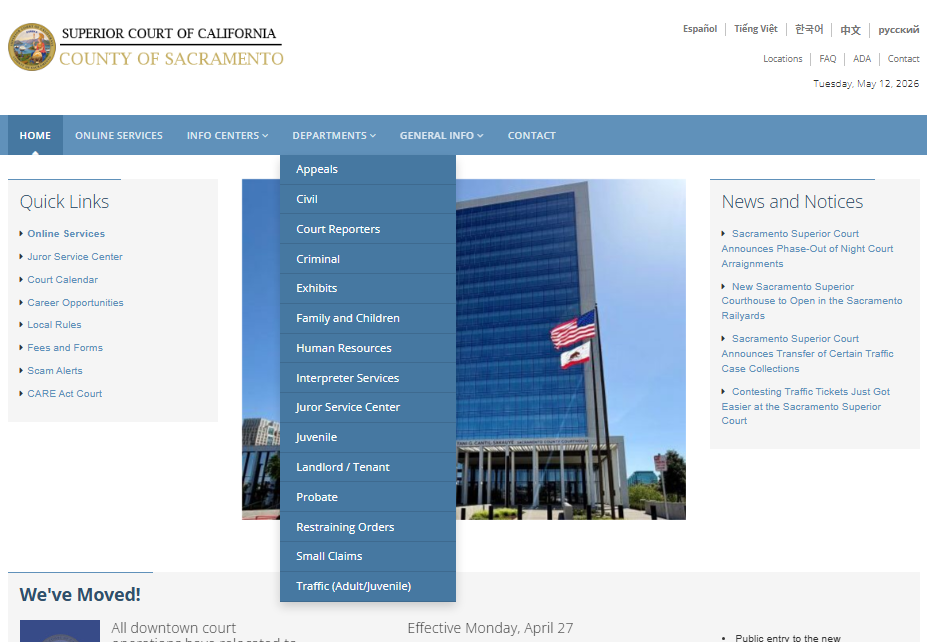
The Sacramento County Superior Court maintains official records https://www.saccourt.ca.gov/ for criminal and civil cases, including cases where bench warrants have been issued. This system is essential for understanding court-related actions that may not appear in jail databases.
How to Search Court Records
- Enter the individual’s full name or case number
- Select court location if prompted
- Click Search
The system provides detailed case information such as case number, filing date, charge descriptions, court department, and current case status. If a bench warrant has been issued, it will typically be reflected in the case status or hearing records.
Alternative Verification Methods
If online tools do not return results, Sacramento County also provides direct contact options for verification:
- Main Jail Inquiries: 916-874-6752
- Sheriff Non-Emergency Line: 916-874-5115
- Sacramento County Courthouse: 720 9th Street, Sacramento, CA 95814
These offices can confirm custody status or guide users to the correct record request process.
Legal Rights and Responsibilities When a Warrant Exists
Discovering a warrant—whether your own or someone else’s—triggers specific legal obligations and protections under California law. Ignoring a warrant can lead to arrest during routine stops, increased penalties, or denial of bail.
Your Rights Upon Discovery
You have the right to confirm the warrant’s validity, understand the charges, and seek legal representation. Law enforcement must show a physical copy of the warrant during an arrest, but they can detain you based on database entries if the paper version is pending.
- You may ask for the warrant number and issuing court.
- You can request a copy of the charging document from the court clerk.
- You have the right to remain silent and request an attorney before answering questions.
- If arrested, you must be brought before a judge within 48 hours (excluding weekends and holidays).
Steps to Resolve an Active Warrant
Resolving a warrant requires proactive engagement with the court or law enforcement. Simply turning yourself in is not always the fastest path—scheduling a court appearance may be preferable.
- Confirm the warrant using the court index or the Sheriff’s website.
- Contact the court listed on the case to schedule a hearing or arraignment.
- If bail is set, arrange payment through a bondsman or cash deposit at the courthouse.
- Appear on the scheduled date with legal counsel if possible.
For bench warrants, some courts allow online clearance for minor offenses. Check the Sacramento Court’s “Clear a Warrant” portal at saccourt.ca.gov for eligibility.
Risks of Ignoring a Warrant
Failing to address a warrant can result in escalated consequences. Police may arrest you during traffic stops, airport screenings, or employment background checks. Additional charges like resisting arrest or failure to appear may be added.
- Warrants appear on statewide criminal history reports.
- Employers, landlords, and licensing boards may deny applications based on active warrants.
- Immigration status can be affected if the warrant involves a deportable offense.
Prompt action reduces long-term damage to your record and freedom.
Public Access and Privacy Limitations
While California promotes transparency in criminal justice, not all warrant data in Mendocino County is fully public. Privacy laws, ongoing investigations, and victim protection rules restrict access to certain details.
What Information Is Public?
California Government Code § 6254 allows public access to basic criminal justice records. This includes:
- Names of individuals with active warrants (unless sealed)
- Charge descriptions and court case numbers
- Booking dates and facility locations
- Bail amounts and court schedules
However, full police reports, witness statements, and juvenile records are exempt.
Sealed or Restricted Records
Judges may seal warrants during sensitive investigations, such as gang-related crimes or cases involving minors. These records do not appear in public searches. Only law enforcement, attorneys, and court personnel can access them.
Additionally, victims of domestic violence or human trafficking may request anonymity, which hides their address and identity from public databases—even if the suspect has a warrant.
Third-Party Background Check Services
Websites like TruthFinder or Instant Checkmate aggregate data from public sources, including Sacramento County records. However, they are not official and may contain outdated or incorrect information. Always verify findings through government portals.
Under the Fair Credit Reporting Act (FCRA), these services cannot be used for employment, housing, or credit decisions unless compliant with federal regulations. Relying on them for legal matters is risky.
(FAQs) About Sacramento County, CA Arrest Warrants Search
This section answers the most common questions about arrest warrants in Sacramento County, CA, including how to check warrant status, how long warrants stay active, what happens during a traffic stop, and how warrants can affect employment. The information below is based on official procedures used by county law enforcement and courts, helping you understand your legal situation and available options more clearly.
Can I check if I have a warrant in Sacramento County without giving my name?
No, you cannot conduct a completely anonymous warrant search in Sacramento County. All official systems require identifiable information such as your full name, date of birth, or case number. The Sheriff’s Inmate Search and Court Index both mandate name-based queries. Phone inquiries also require verification to protect privacy. While third-party sites claim anonymity, they still collect your IP address and search history. For legal safety, use your real name on official platforms. If you fear retaliation or harassment, contact the court clerk in person and request confidentiality under California Rule of Court 2.550. Judges may restrict public access in rare cases involving safety risks. However, standard warrant checks require disclosure.
How long does a warrant stay active in Sacramento County?
A warrant in Sacramento County remains active indefinitely until resolved by arrest, court appearance, or judicial dismissal. Unlike some states, California does not impose expiration dates on arrest warrants. Bench warrants for missed court dates stay in effect until the individual appears or pays fines. Felony warrants persist even if the suspect moves out of state—they enter the National Crime Information Center (NCIC) database, enabling nationwide enforcement. Only a judge can quash or recall a warrant, typically after reviewing compliance or new evidence. Outstanding warrants also appear on background checks for years, affecting employment and housing. Therefore, addressing a warrant promptly is critical to restoring legal standing and personal freedom.
What happens if I’m pulled over and have an outstanding warrant?
If you are pulled over for a traffic violation and have an outstanding warrant in Sacramento County, the officer will likely arrest you on the spot. During the stop, the patrol car’s computer system checks your name and license against state and local databases. If a match appears, the officer must detain you until the warrant is verified. You will be transported to the nearest jail for booking, where fingerprints and photos are taken. The warrant charge is added to your record, and you may face additional penalties for failure to appear. Bail may be set, but release depends on the warrant type and court schedule. Always carry identification and know your legal rights—request a phone call to contact an attorney immediately after arrest.
Can a misdemeanor warrant affect my job in California?
Yes, a misdemeanor warrant can significantly impact your employment in California. Most employers conduct background checks during hiring, and active warrants appear on county and state criminal history reports. Even if the original offense is minor—such as a traffic citation or petty theft—the unresolved warrant signals non-compliance with the law. Employers in sensitive fields like education, healthcare, or transportation may rescind job offers or terminate current employees. Additionally, professional licenses (e.g., real estate, nursing, or cosmetology) can be suspended by regulatory boards. Some companies use third-party screening services that flag any warrant, regardless of severity. To protect your career, resolve warrants before applying for jobs or renewing licenses. Consult an attorney to explore options like court clearance or diversion programs.
Is warrant information available to the public in Sacramento County?
Yes, warrant information is partially available to the public in Sacramento County, but with limitations. Basic details such as names, charges, and court case numbers can be found through the Sheriff’s Inmate Search, Most Wanted list, and Court Index System. However, full warrant affidavits, police reports, and sealed records are not disclosed. Juvenile warrants and those involving protected victims are entirely confidential. The public can access data online or in person, but must provide accurate identifiers like full names or case numbers. Law enforcement agencies are prohibited from confirming the existence of a warrant over the phone without verification. While transparency is encouraged, privacy laws balance access with individual rights. Always use official sources to ensure accuracy and avoid misinformation from unofficial websites.
916-874-5744
| Office | Address | Phone | Hours |
| Sacramento County Sheriff’s Department | 7560 Stockton Blvd, Sacramento, CA 95823 | 916-874-5115 | Mon–Fri: 8:00 AM – 5:00 PM |
| Main Jail | 6300 20th St, Sacramento, CA 95823 | 916-874-6752 | 24/7 Inmate Info Line |
| Superior Court Clerk | 720 9th St, Sacramento, CA 95814 | 916-874-5744 | Mon–Fri: 8:00 AM – 4:00 PM |